

Selling on Amazon has changed a lot since I started in 2021, but the fundamentals remain the same.
Buy cheap stuff, sell on Amazon for a higher price and repeat.
It’s still a great way to get started with making money online since it doesn’t require a huge investment like other businesses.
In this post I will do a full breakdown on how much capital you need in order to start selling on Amazon in 2026 and beyond.
Subscriptions
You need 3 subscriptions to get started.
This includes the Amazon professional seller account, Keepa and SellerAmp.
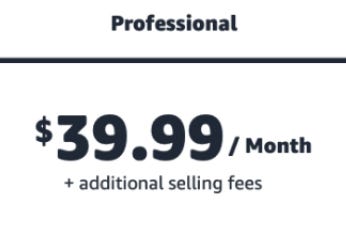
Professional Seller Account
In order to send your items in to Amazon’s warehouses, you need a professional seller account.
This subscription is $40/month, and gives you full access to Amazon’s logistics system.
Once they have your inventory, they take care of shipping, customer service and returns.
The $40 is taken directly out of your Amazon balance, so after your first payment this fee shouldn’t come directly out of your pocket.
Keepa
There are a lot of different software tools for selling on Amazon, but as a beginner you only need two - Keepa being the first one.
Keepa is by far the most useful and most cost effective software for every Amazon seller.
It is a product research tool that gives you a full breakdown of a product for the entire time it’s been listed on Amazon.
You can see really valuable data like how much the item has sold for, it’s sales rank and how many sellers have been on the listing.
In some ways, it’s similar to analyzing a stock.

Doing effective product research without Keepa is nearly impossible.
At 19 Euros/month (usually comes out to between $21-$24/month), the value it provides far outweighs how much it costs.
Most Amazon businesses would fail miserably without it - if I owned Keepa I would 10x the price tomorrow because there is quite literally no alternative.
I currently have 4 Keepa subscriptions, one for myself and one for each member of my product research team.
SellerAmp
Similar to Keepa, SellerAmp is an inexpensive tool that is very useful for product research.
It’s main function is giving you a basic overview of a product with a built in profit calculator to help you make well informed buying decisions.
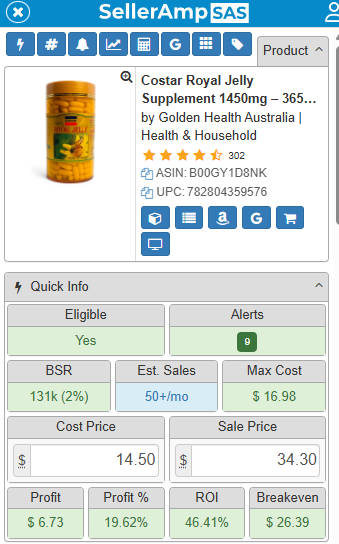
The basic plan is $20/month, and combined with Keepa you have two very cheap tools that are worth their weight in gold.
Supplies
One thing I should note is that technically you do not need any sort of supplies since you can hire a prep center to receive, handle and send your products in to Amazon for you.
However, as a beginner I think it’s important that you spend the first few months doing everything yourself so you can understand how the business works and be able to effectively vet a prep center in the future.
Thermal Printer + Labels
Items sent in to Amazon need to be individually labelled so employees and scan them and check them in.
You also need to print shipping labels so that your shipments can be sent to Amazon fulfillment centers in the first place.
A thermal printer allows you to print both of these - there are a lot of brands out there but in my opinion Rollo is by far the best.
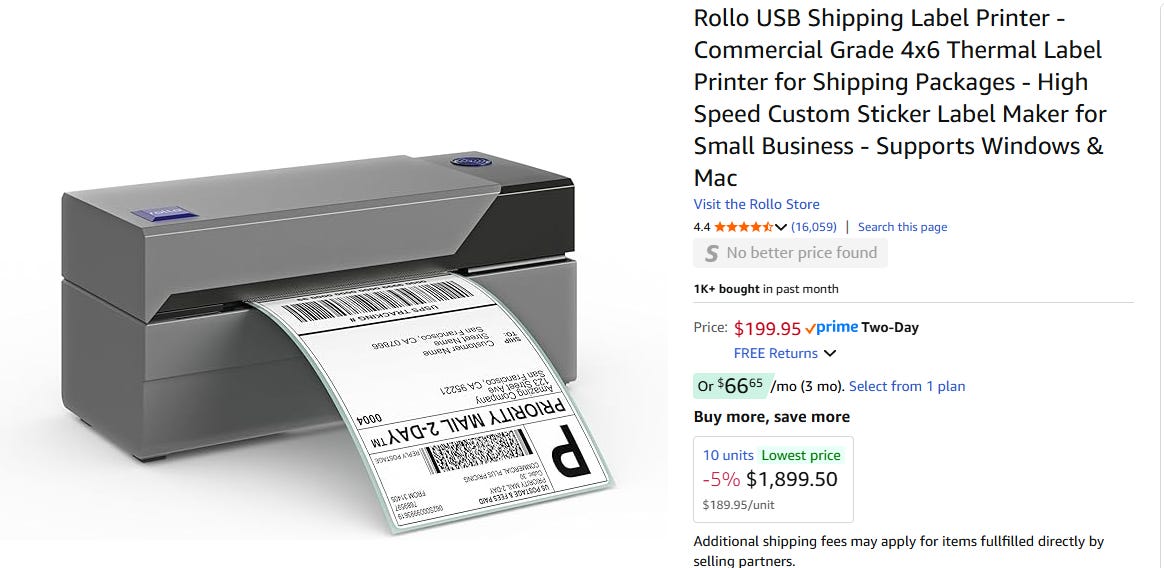
Yes, there are cheaper options but this one is extremely high quality and will last forever.
Don’t cheap out on the printer because you’ll be using it a lot - not to mention some of those cheaper printers are incompatible with shipment creation software that you may end up using down the road.
If you’re really looking to cut costs, you can find a used Rollo on eBay in the range of ~$75-$150:

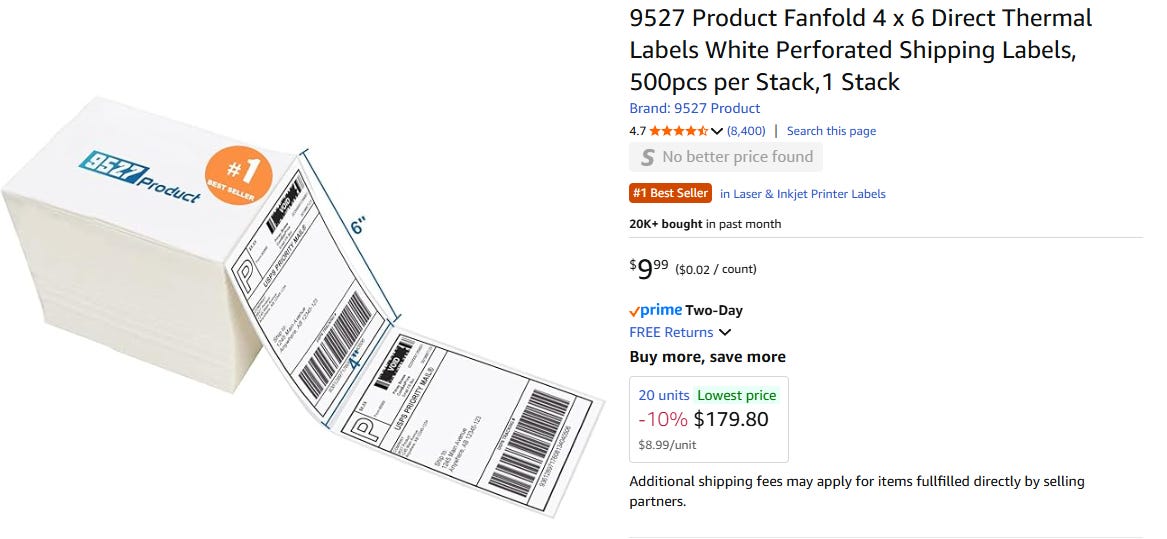
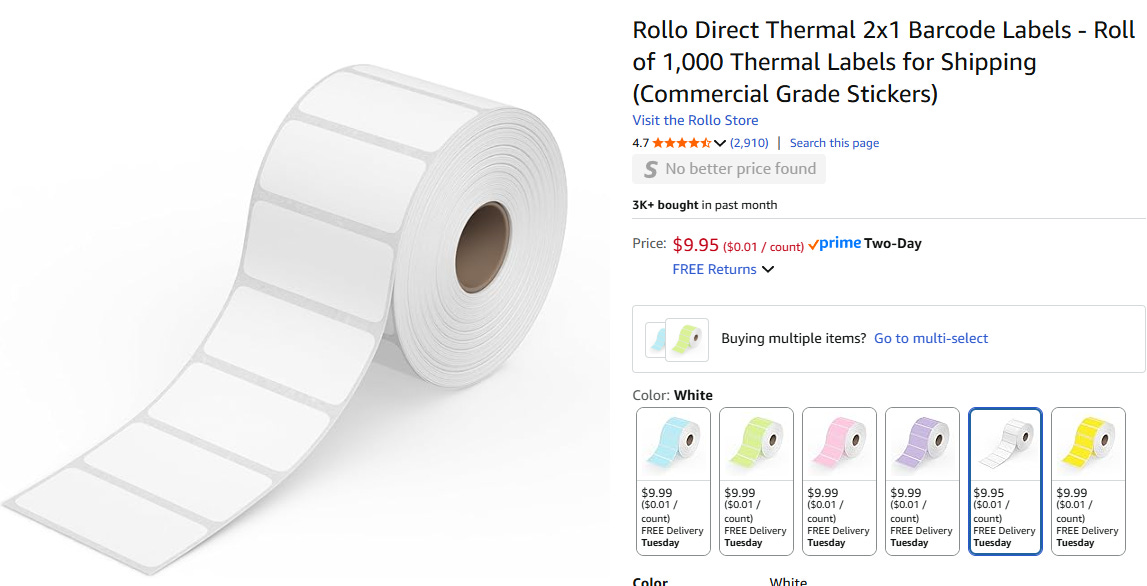
Labels are super cheap and you can buy them anywhere - I would just buy them from Amazon for the sake of convenience.
4x6 shipping labels ($10 for 500):
2x1 product labels ($10 for 1000):
Tape + Boxes
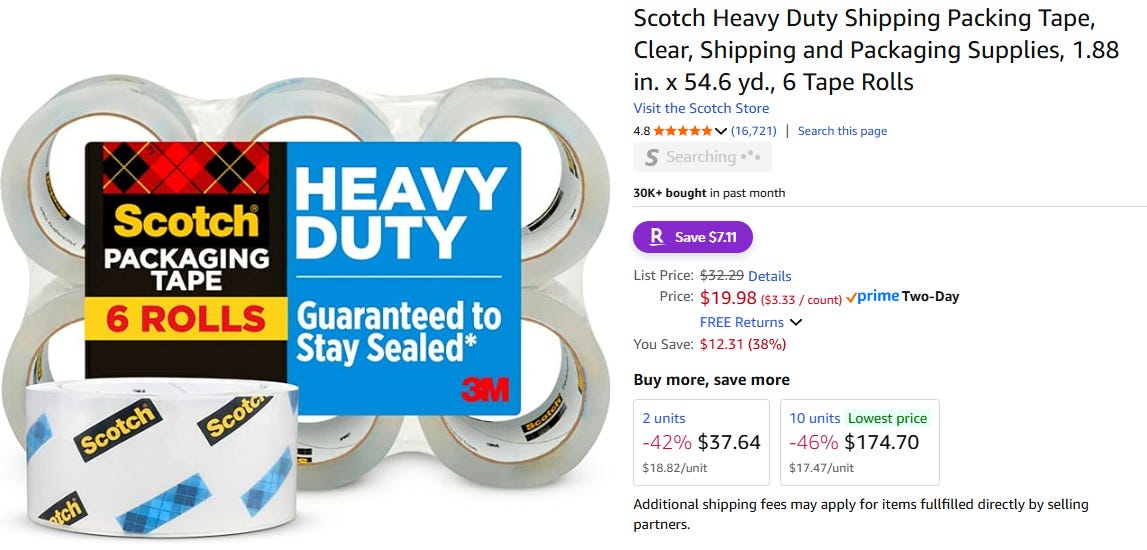
Any decent quality tape will do - I personally like the Scotch heavy duty rolls:
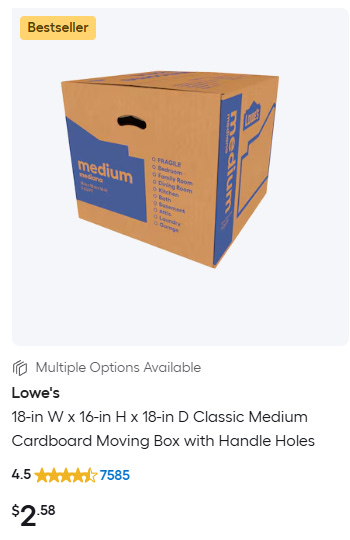
Moving boxes from your local hardware store work great for FBA shipments.
My personal favorite is the 18x18x16 from Lowe’s, but it doesn’t matter too much which ones you use:
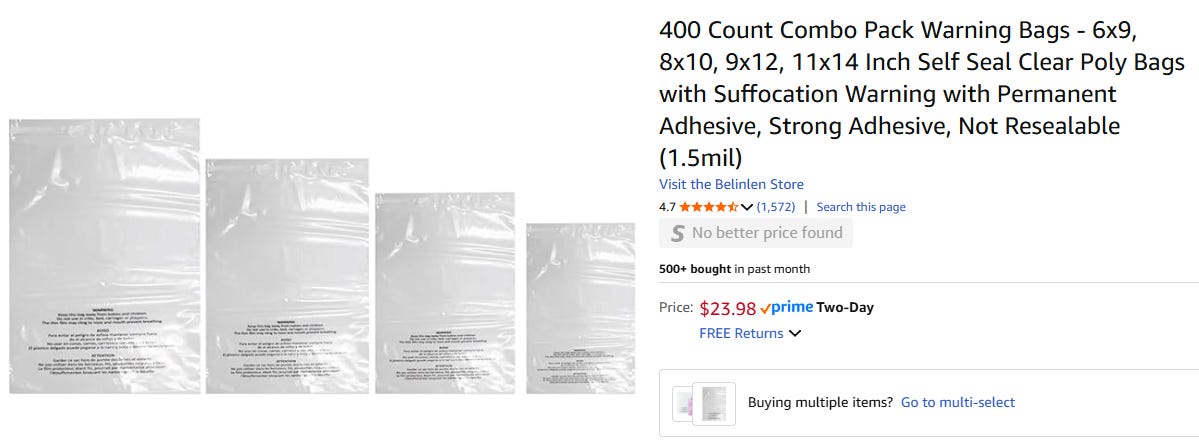
Polybags
Some items may be required to be put in a polybag to reduce potential damage while in transit.
Example include:
Loose clothing
Shampoo bottles
Liquid soap
Plush toys
Small cosmetics
Depending on what types of items you end up selling, you may not need polybags at all but it’s important to have some on hand just in case.
They also need to have a choking hazard warning on them - you can buy them on Amazon for cheap (~$25 for a pack):
Tape Gun
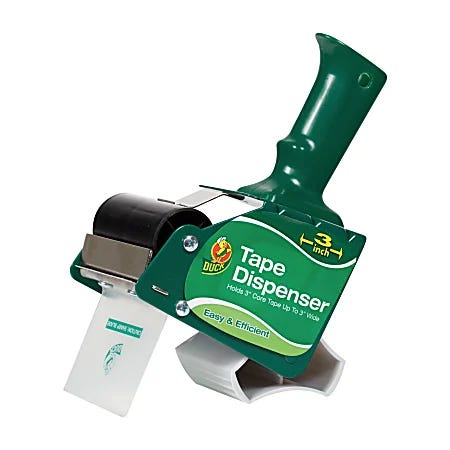
Makes packing boxes a lot easier and a lot faster.
Zero reason not to get one - best ten dollars you’ll ever spend.
Brand doesn’t matter.
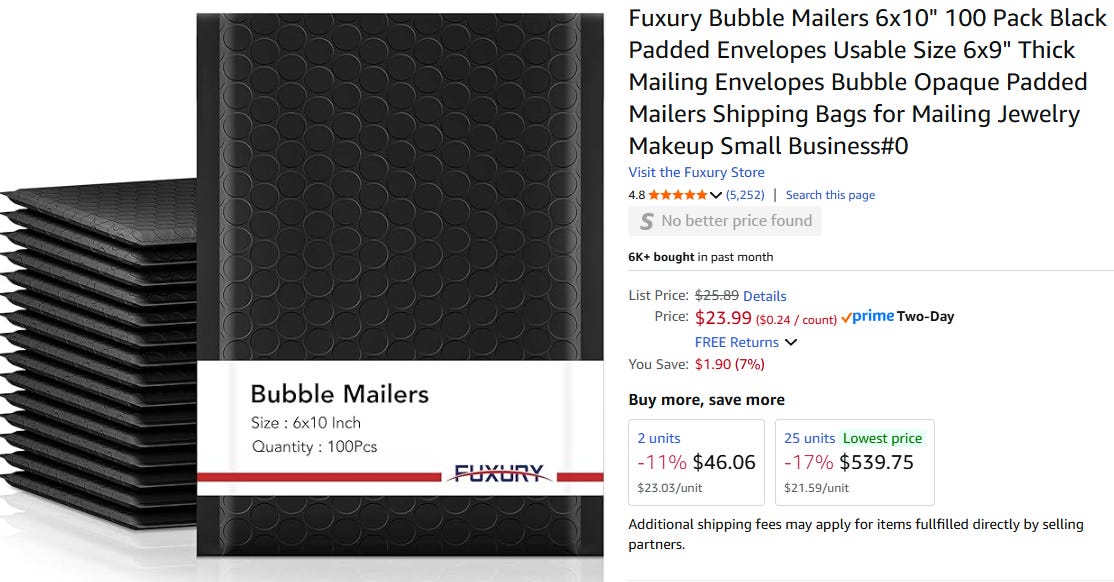
Bubble Mailers
If you decide to fill orders yourself via FBM, you’ll want bubble mailers for packing items.
These usually come out to ~$20-$30 for a pack of 100.
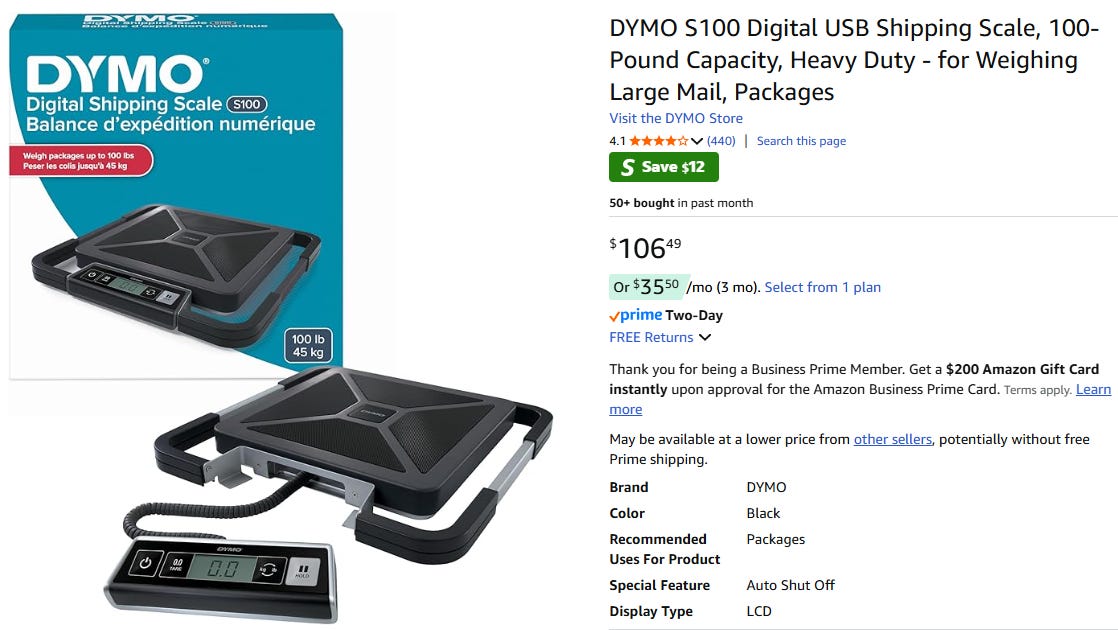
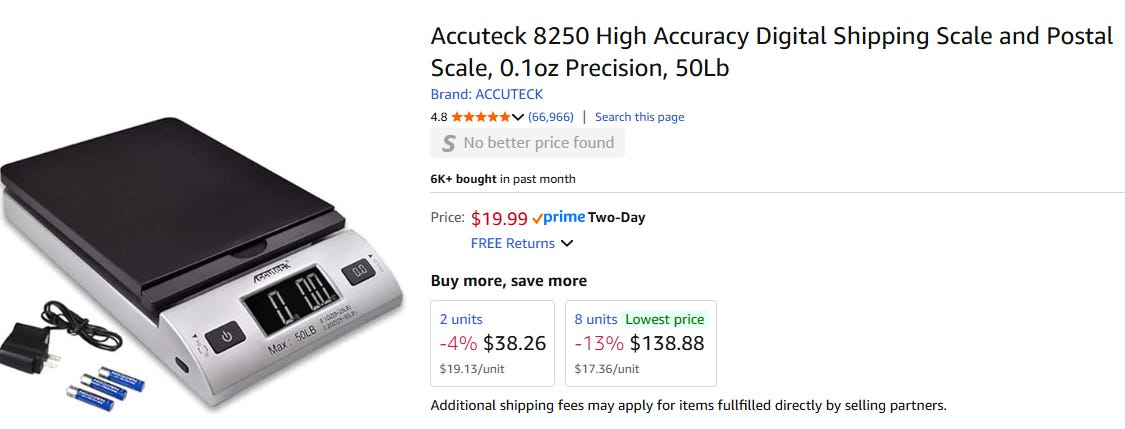
Shipping Scale(s)
Boxes sent to FBA need to be less than 50 pounds.
To ensure this, use a shipping scale.
I prefer this Dymo one:
For individual FBM orders where you’re shipping directly to the customer, I like this smaller one:
Inventory
Now that we have our software and supplies, it’s time to start buying inventory.
This is where the question “How much do I need to start?” can get a little ambiguous.
How much you’ll need really depends on what your goals are.
If your goal is just to create some side income and make an extra ~$1500/month, you don’t need a lot of capital for buying inventory.
If you want to scale to 100k/month in revenue and quit your job to sell on Amazon, it’ll take a long time to get there if you only start with $500.
For the average person, I think $1,000 is a good starting point because it allows you to get your feet wet with testing different products and seeing what items are profitable.
Once you’ve proven the concept you can reload with more cash to start scaling up.
Summary
Let’s put everything together.
Software / Subscriptions: $80
Shipping Supplies: ~$500
Inventory: $1000
Total: $1600
As a conservative estimate, I think $1600 is enough to get started with selling on Amazon.
This number assumes you bought the Rollo printer at full price and 20 medium boxes (which should be enough for several FBA shipments).
You can always start with less, but it will be far more difficult.
If you’re serious about scaling to 6 figures I would want to start with at least $5000 so you can start buying lots of inventory and turn that capital around ASAP.
Hopefully this post gave you an idea of what investment you need to reach your goals.
I’ll gladly respond to any questions in the comments.
good info for anyone selling. Thanks for the thermal printer options.
Hi mahi! Can I test demand on Amazon without having to have a product and shipping? Eg. add to cart ratio. Like Shopify. Or do I have to make the product first and send to Amazon warehouses.